Pile Testing Equipment
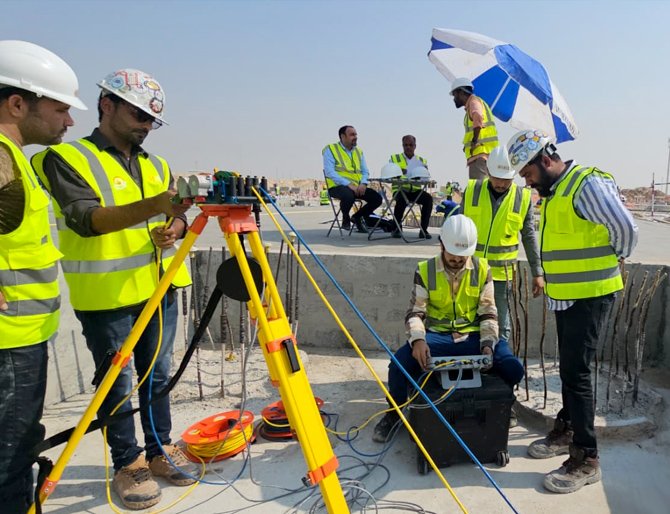
Falcon Lab LLC provides advanced pile testing equipment in Oman for foundation contractors, construction companies, geotechnical consultants, and testing laboratories. Our solutions help engineers evaluate pile integrity, load capacity, and foundation performance using reliable testing technologies.
With technical experts, factory-trained engineers, and experience supporting foundation projects, Falcon Lab supplies complete solutions for deep foundation testing, including equipment selection, installation, calibration, and after-sales support.
Our range of pile integrity testing equipment and geotechnical testing equipment helps identify defects, verify construction quality, and ensure safe and durable foundation systems.
Factory
Factory Trained Engineers
Introduction to Pile Testing
Deep foundations are critical for large construction projects, making accurate testing essential for long-term structural performance. Pile testing evaluates the quality, integrity, and load-bearing capacity of installed piles to ensure they meet engineering requirements.
Falcon Lab provides foundation testing equipment designed for non-destructive testing (NDT), allowing engineers to inspect piles without damaging existing structures.
These solutions support:
- Foundation integrity evaluation
- Pile quality assessment
- Construction verification
- Geotechnical testing
- Engineering decision-making
Understanding Pile Testing
Pile testing is the process of examining foundation piles to detect defects, measure integrity, and confirm structural performance. It helps engineers understand pile conditions before construction approval or during foundation inspections.
The typical testing workflow includes:
- Site assessment
- Equipment selection
- Testing process
- Data collection
- Result interpretation
- Engineering evaluation
Using advanced foundation inspection equipment allows professionals to identify irregularities, evaluate pile integrity, and improve confidence in deep foundation systems.
Types of Testing Equipment
Pile Echo Testing Method
Pile Echo Testing is a non-destructive testing method that uses stress wave reflection to evaluate pile integrity. A Pile Echo Tester (PET) helps detect defects, estimate pile length, and assess concrete pile quality.
Features include:
● Fast inspection process
● Cost-effective testing
● Minimal site disruption
● Suitable for various pile types
Cross Hole Sonic Logging
Cross Hole Sonic Logging (CSL) uses ultrasonic technology to evaluate the internal quality of concrete piles, especially large diameter piles and drilled shafts.
It helps identify:
● Internal defects
● Voids and cracks
● Weak concrete zones
● Structural inconsistencies
CSL testing is widely used for critical foundation projects requiring detailed pile integrity analysis.
Parallel Seismic Testing
Parallel Seismic Testing (PSI) is used to evaluate deep foundations where pile length or condition needs additional assessment. This method uses seismic wave propagation to estimate pile depth and integrity.
Benefits include:
● Effective for existing foundations
● Suitable for long piles
● Supports difficult site conditions
● Provides reliable engineering data
Borehole Inclination Testing
Borehole inclination testing measures drilling alignment, deviation, and vertical accuracy during foundation construction.
It supports:
● Borehole testing
● Deep foundation alignment
● Construction quality control
● Accurate drilling operations
Product Categories and Features
Pile Integrity Testing Equipment
Evaluate the integrity and quality of foundation piles.
Dynamic Pile Testing Equipment
Impact-based testing for load capacity and performance assessment.
Static Load Testing Equipment
Direct load application to determine pile load-carrying capacity.
Foundation Inspection Equipment
Inspection tools for foundation assessment and evaluation.
Borehole Testing Instruments
Measure inclination, alignment, and subsurface conditions.
Testing Accessories
Cables, sensors, software and field accessories for accurate testing.
Key features include:
- Accurate data collection
- Portable testing solutions
- Advanced analysis capabilities
- Reliable field performance
Product Comparison
Selecting the appropriate testing equipment depends on the project scope, pile type, and inspection objectives. The comparison below helps identify the most suitable solution for different foundation testing applications.
Equipment | Best For | Testing Method |
Pile Echo Tester (PET) | Concrete piles | Stress wave reflection |
Cross Hole Sonic Logging (CSL) | Large diameter piles | Ultrasonic testing |
Parallel Seismic Testing (PSI) | Existing foundations | Seismic wave propagation |
Borehole Inclination Testing | Drilling projects | Inclinometer measurement |
Dynamic Pile Testing Equipment | Load capacity assessment | Impact testing |
Static Load Testing Equipment | Load verification | Static loading |
Testing Methods and Applications
Pile testing methods help engineers select the right approach based on project requirements.
Common methods include:
Non-Destructive Testing (NDT)
NDT methods allow engineers to evaluate pile integrity without damaging the structure. Fast, safe, and cost-effective inspection with reliable results.
Dynamic Pile Testing
Uses impact energy to measure stress wave response and estimate load-carrying capacity. Ideal for routine testing and performance evaluation.
Static Load Testing
Applies static load to the pile and measures settlement to verify load capacity. Provides the most accurate assessment of pile performance.
Applications include:
- Bridge foundations
- High-rise buildings
- Marine structures
- Industrial facilities
- Transportation projects
- Infrastructure developments
- Offshore and onshore projects
- Geotechnical investigations
Standards and Compliance
Reliable pile testing requires compliance with recognized testing standards. Falcon Lab provides solutions supporting internationally accepted procedures, including:
- ASTM D5882
- ASTM D6760
These standards help ensure:
- Accurate testing procedures
- Reliable results
- Consistent evaluation
- Quality assurance
Selecting the Right Equipment
Choosing the right pile testing equipment depends on foundation type, testing objectives, project conditions, and required accuracy.
Product Selection Factors
Important considerations include:
- Foundation size and type
- Testing method requirements
- Soil conditions
- Data output requirements
- Site accessibility
- Long-term support needs
Falcon Lab’s technical experts assist customers in selecting suitable solutions for their specific foundation testing requirements.
Calibration and Installation
Proper installation and calibration are essential for accurate testing results. Falcon Lab provides professional setup, performance verification, and calibration support through trained technical teams.
The process includes:
- Installation and commissioning
- Calibration laboratory verification
- Performance testing
- Operator training and handover
Services include:
- Equipment installation
- Commissioning
- Calibration laboratory support
- Performance checks
- Technical assistance
Regular calibration improves measurement accuracy and extends equipment reliability.
Buying Guide and Maintenance
Investing in reliable geotechnical testing equipment ensures better performance, accurate results, and long-term value.
Consider:
- Testing capabilities
- Standards compliance
- Software features
- Equipment durability
- Warranty support
- After-sales service
Equipment Maintenance Tips
Recommended practices:
- Inspect sensors and cables regularly
- Clean equipment after use
- Store instruments properly
- Schedule calibration
- Follow manufacturer guidelines
- Use genuine accessories
Why Choose Falcon Lab?
Falcon Lab is a trusted supplier of foundation testing solutions, supporting customers with technical expertise and dependable service.
Our advantages include:
- Experienced technical specialists
- Authorized supplier partnerships
- Factory-trained engineers
- Calibration support
- Project experience
- After-sales assistance
From equipment selection to installation and maintenance, Falcon Lab delivers complete support for foundation engineering requirements.
Frequently Asked Questions
What is pile testing equipment used for?
Pile testing equipment evaluates foundation integrity, pile quality, load capacity, and structural performance for construction, geotechnical, and infrastructure projects.
Which pile testing method is best?
The best method depends on pile type, project requirements, and testing objectives. Falcon Lab helps you choose the right testing solution.
What is the difference between PET and CSL testing?
PET evaluates pile integrity using stress waves, while CSL uses ultrasonic waves to detect internal defects in concrete piles.
Which standards apply to pile testing?
Pile testing commonly follows ASTM D5882 and ASTM D6760 standards for accurate, reliable, and standardized foundation evaluation.
Does Falcon Lab provide installation and calibration?
Yes. Falcon Lab offers installation, commissioning, calibration, technical support, and operator training for supplied pile testing equipment.
How often should pile testing equipment be calibrated?
Calibration should follow manufacturer recommendations or project requirements to maintain testing accuracy and reliable performance.
Which industries use pile testing equipment?
Construction companies, geotechnical laboratories, consultants, infrastructure developers, government agencies, and foundation contractors commonly use pile testing equipment.
Why choose Falcon Lab for pile testing equipment?
Falcon Lab provides quality equipment, expert consultation, factory-trained engineers, calibration services, and dependable after-sales support across Oman.
Contact Falcon Lab
Need Reliable Pile Testing Equipment?
Choose Falcon Lab for advanced pile testing solutions designed for construction, geotechnical testing, and foundation inspection applications.
Contact our experts for equipment recommendations, technical consultation, installation, and calibration services.